
Week 4 at Titan Yachts marks a pivotal transition in the yacht building process. With structural foundations established and major mechanical layouts defined in prior weeks, both Hull #14 and Hull #16 are now entering critical integration and finishing phases. This stage of construction demands heightened precision—where surface finishes are sealed for durability, electrical infrastructure is routed with long-term serviceability in mind, and interior spaces move closer to receiving custom cabinetry.
As always, every step reflects the discipline and detail that define Titan Yachts craftsmanship and the construction of a true custom sportfishing yacht.
Hull #14 – Finalizing and Sealing the Faux Teak Finish
Hull #14 reached a significant milestone this week as the faux teak finish progressed into its protective sealing phase. After multiple weeks of base coating, grain development, mid-tone blending, and shadow detailing, the surface was ready for final inspection and preparation for clear coat application.
Surface Inspection and Pre-Seal Preparation
Before any marine clear coat is applied, the entire faux teak surface undergoes a meticulous inspection process. This includes:
- Light sanding between glaze layers to remove minor imperfections
- Tack-cloth cleaning to eliminate dust particles
- Surface degreasing to prevent contamination
- Controlled environmental monitoring (temperature and humidity stabilization)
Clear coat performance is heavily influenced by application conditions. Maintaining a clean, climate-controlled environment ensures proper curing and long-term durability.
Marine-Grade Clear Coat Application
The team began applying multiple layers of UV-resistant marine clear coat designed specifically for offshore exposure. Each coat serves a dual purpose:
- Protect the faux teak finish from saltwater, abrasion, and ultraviolet degradation
- Enhance the visual depth of the grain, creating a rich, dimensional appearance
The application process includes carefully measured flash times between coats and light sanding to ensure optimal adhesion for subsequent layers. The result is a smooth, glass-like protective barrier that not only safeguards the finish but elevates the realism of the teak grain.
Compared to traditional natural teak decking, this faux teak finish significantly reduces long-term maintenance while preserving the warm aesthetic expected on a high-end custom sportfishing yacht.
Hull #16 – Electrical Infrastructure Installation
While Hull #14 advances cosmetically, Hull #16 continues deeper into technical integration with the installation of its electrical infrastructure. Electrical planning is one of the most critical stages in sportfishing yacht construction, as it impacts safety, system performance, and future serviceability.
Main Wiring Harness Installation
This week focused on routing the primary wiring harnesses throughout the vessel. Harness runs were strategically placed to:
- Separate AC and DC systems
- Avoid interference with fuel and plumbing lines
- Maintain accessibility for inspection and maintenance
- Protect wiring from vibration and moisture exposure
Each harness is labeled, documented, and secured using marine-grade fasteners and insulated clamps. This documentation becomes part of the vessel’s long-term service record, reinforcing Titan Yachts’ commitment to transparency and precision.
Electrical Panel Mounting and Access Planning
Panel mounting locations were finalized to ensure easy access without compromising interior design. Clearances were verified so future upgrades—such as advanced electronics, navigation systems, or custom fishing equipment—can be integrated seamlessly.
Grounding and Bonding Systems
The grounding and bonding systems were also advanced this week. These systems are essential for:
- Corrosion prevention
- Lightning protection
- Electrical fault safety
- Compliance with marine safety standards
In offshore conditions, reliable bonding can significantly extend the lifespan of onboard systems. Attention at this stage prevents costly complications years down the line.

Engine Room – Continued System Integration
The engine room on Hull #16 continues evolving from layout phase to component integration. This week included:
- Installation of secondary mechanical components
- Final positioning of fuel filtration assemblies
- Alignment checks for pump mounts
- Reinforcement of vibration isolation systems
Every mechanical component is installed with a focus on long-term serviceability. Clearance checks ensure that filters, belts, and pumps can be accessed without dismantling surrounding systems—a design philosophy central to the Titan Yachts approach.
This forward-thinking layout improves maintenance efficiency and enhances the vessel’s reliability during extended offshore runs.
Interior Construction – Preparing for Custom Cabinetry
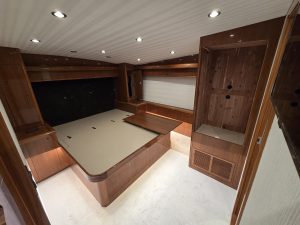
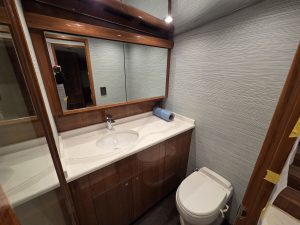
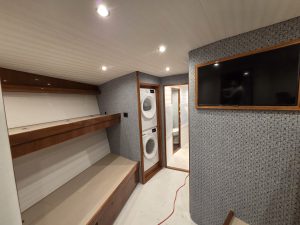
Hull #16’s interior continues transitioning from framework to finish preparation. With bulkheads installed and room boundaries defined in prior weeks, attention has shifted toward cabinetry readiness.
Subfloor Inspection and Reinforcement
The team conducted subfloor inspections to verify level alignment and structural integrity. Reinforcements were added where necessary to ensure cabinetry and interior furnishings will remain stable under offshore motion.
Sound-dampening materials were also introduced in select areas to reduce vibration transfer between compartments—a hallmark of refined yacht interior construction.
Cabinet Base Framing and Anchor Points
Cabinet base framing began this week, establishing secure anchor points for future fine woodwork installation. Measurements were finalized with precision to ensure that:
- Weight distribution remains balanced
- Appliances and built-in components fit seamlessly
- Traffic flow between living areas remains unobstructed
These early cabinetry preparations are critical. Even minor alignment deviations at this stage could impact final finishes, so accuracy is paramount.
From Structure to Precision Finish
Week 4 represents a shift in the overall yacht building process—from foundational construction toward refinement and integration. Faux teak surfaces are now protected and enhanced. Electrical systems are forming the vessel’s operational backbone. Interior spaces are transitioning from structural outlines to personalized living environments.
At Titan Yachts, this phase demands heightened coordination between departments. Painters, electricians, carpenters, and mechanical technicians must work in sequence, ensuring each installation complements the next without compromise.
This disciplined progression is what distinguishes a production vessel from a truly custom sportfishing yacht.
Looking Ahead to Week 5
Next week, we anticipate:
- Completion of the faux teak clear coat process on Hull #14
- Continued expansion of electrical and bonding systems
- Further mechanical component integration in the engine room
- Advancement toward full cabinetry fabrication and installation
With each passing week, both Hull #14 and Hull #16 move closer to becoming fully realized examples of Titan Yachts craftsmanship.
Titan Yachts – Engineering Performance, Crafting Excellence
Every Titan build reflects a commitment to structural integrity, offshore performance, and aesthetic refinement. From marine clear coat application to electrical system integration and interior cabinetry preparation, each stage reinforces our dedication to building the highest-caliber custom sportfishing yachts on the water.
Follow the Behind the Build series at www.titanyachts.com as we continue documenting the transformation from raw hull to offshore-ready sportfishing machine.